Wooden Cat Tree Tower: Condo, Hammock & Scratch Zones
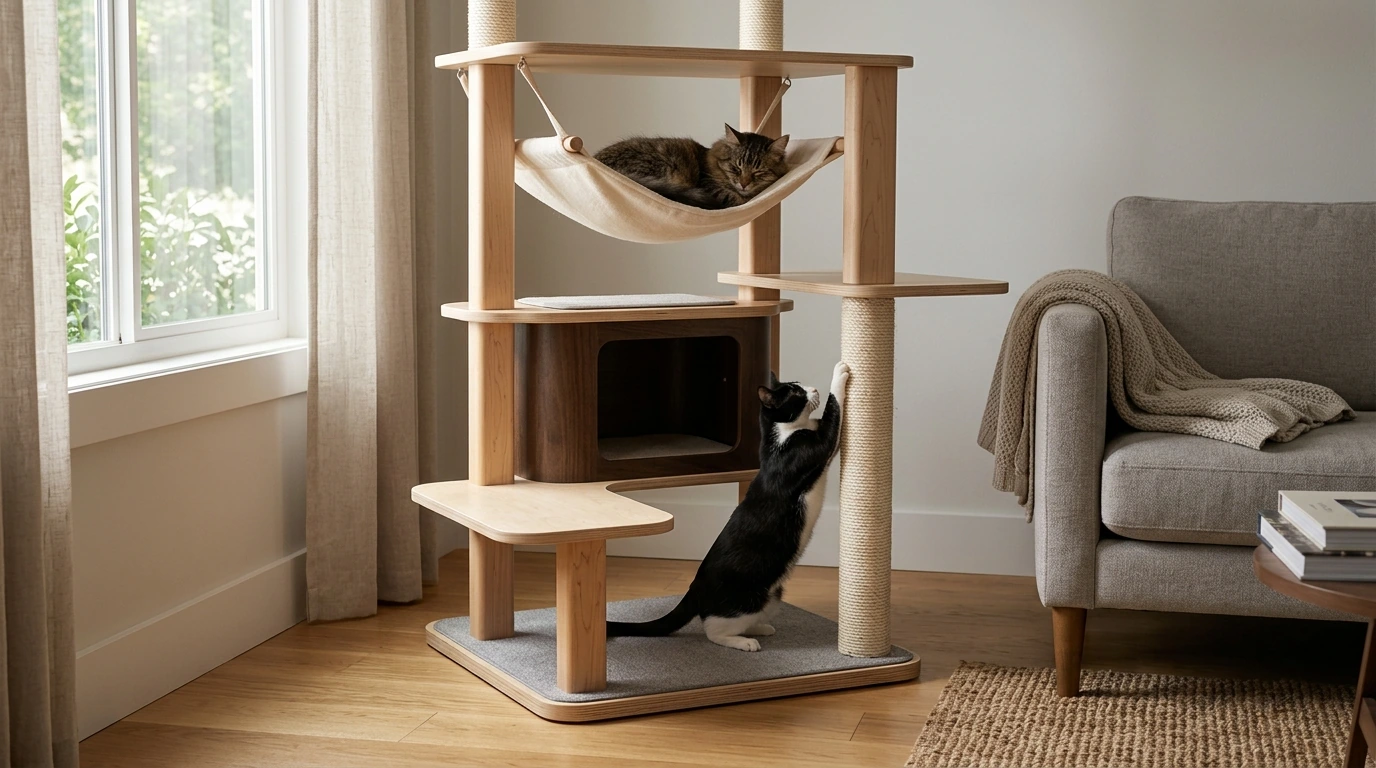
Wooden Cat Tree Tower with Condo, Hammock, and Scratching Post: Comfort, Climbing, and Daily Claw Care
A well-built cat tower can turn one corner of a room into a complete hangout—climbing routes, a private hideaway, a nap spot, and a dedicated place to scratch. This wooden cat tree tower combines a condo, hammock, and scratching post elements to support play, rest, and healthier scratching habits in one stable footprint.
What Makes This Tower a Great Daily Hangout
Some cat furniture looks purely “pet” (and tends to migrate to the back room). A wood-forward tower, on the other hand, reads more like a compact piece of furniture—easy to place in a living room, office, or bedroom without visually taking over the space.
The real win is how the features work together. A condo gives cats a secure retreat for decompression and quiet naps. A hammock offers an off-the-floor lounge that many cats prefer for its gentle cradle and airflow. And the scratching post surfaces give claws a consistent target, helping redirect scratching away from rugs, sofas, and door frames. Because it’s a multi-zone setup, cats can switch between play and rest without leaving the tower—ideal for indoor cats that like to “patrol,” pause, then snooze.
Condo, Hammock, and Scratching Areas: How Cats Use Each Feature
Each part of the tower supports a different instinct. When those instincts are met in one place, cats tend to return to it throughout the day—especially after meals, play sessions, and naps.
- Condo: Great for shy cats, multi-cat homes, or midday “off duty” time. Placement matters: if your cat startles easily, avoid putting the tower right beside loud walkways or slamming doors.
- Hammock: Often becomes the primary nap station for cats that like a gentle, cradled feel. It can also help keep fur off human seating by giving your cat a “better” lounge option.
- Scratching zones: Scratching supports stretching, shedding claw sheaths, and scent marking. A scratch area positioned near the tower entrance or beside a favorite nap spot tends to get used more consistently.
- Vertical movement: Short climbs and hops encourage exercise and confidence-building, especially for indoor cats that need more daily movement opportunities.
Feature guide: best use cases and quick checks
| Feature | Best for | Quick check before buying |
|---|---|---|
| Condo hideaway | Nervous cats, multi-pet homes, quiet naps | Opening size should allow comfortable turning; interior should be easy to vacuum |
| Hammock lounge | Cats that love soft cradled naps | Fabric should feel sturdy and easy to spot-clean; attachment points should look reinforced |
| Scratching post areas | Daily stretching and claw maintenance | Scratching material should be tightly wrapped or securely attached; check height for a full-body stretch |
| Platforms/levels | Climbing, surveying, play sessions | Look for stable joints and non-slip surfaces to reduce slips during jumps |
Stability and Materials: What to Look For in a Wooden Cat Tower
For a tower that gets used daily (especially by athletic jumpers), stability matters more than having the most add-ons. A wider, heavier base reduces wobble during launches and landings. Quality hardware and tight joints keep everything feeling solid over time, even as cats sprint up, leap off, and “test” every platform.
Wood surfaces should be smoothly finished with edges that won’t snag fur or catch claws during quick turns. Since scratching is a natural behavior—not “bad behavior”—it helps to have adequate scratch coverage so your cat doesn’t decide the wood itself is the best scratch spot. If you have a larger cat or a long-bodied adult, prioritize broader platforms and robust connections so lounging positions stay comfortable and secure.
For guidance on supporting normal feline behaviors indoors (including climbing, perching, and scratching), see the American Association of Feline Practitioners (AAFP) environmental needs guidelines. For context on why scratching outlets are important and how claw care fits into humane cat management, the American Veterinary Medical Association (AVMA) declawing policy is a helpful reference.
Where to Place It for Maximum Use
Placement can make the difference between a tower that’s “nice to have” and one that becomes the daily headquarters.
Helping Cats Transition to the Tower (Especially the Condo and Hammock)
Care and Cleaning Without Damaging Wood or Fabrics
Product Snapshot
At-a-glance details
| Item | Details |
|---|---|
| Product | Wooden Cat Tree Tower with Condo, Hammock, and Scratching Post |
| Price | $532.08 USD |
| Availability | In stock |
For cats that need additional daily movement (especially high-energy indoor cats), pairing vertical climbing with a cardio option can round out enrichment. Consider adding the Interactive Indoor Cat Exercise Wheel in a separate area so your cat can switch between sprinting, climbing, and resting without crowding one spot.
FAQ
How tall should a scratching post be on a cat tower?
Aim for a scratching surface tall enough for a full-body stretch, where your cat can reach up and extend comfortably. Taller vertical scratch zones are often used more than short posts because they let cats stretch shoulders and back while scratching.
Why do some cats avoid the condo on a cat tree?
Common reasons include noisy or high-traffic placement, unfamiliar scent, or an opening that feels too tight to enter and turn around. Moving the tower to a calmer spot and using treats or familiar bedding can make the condo feel safer and more inviting.
Is a hammock safe for larger cats?
It can be safe if the fabric is sturdy and the attachment points are reinforced and properly secured. Keep hardware tightened and discontinue use if the hammock starts sagging excessively or seams show signs of weakening.








Leave a comment