Twin Over Full Bunk Bed: Storage Stairs, Shelves & Drawers
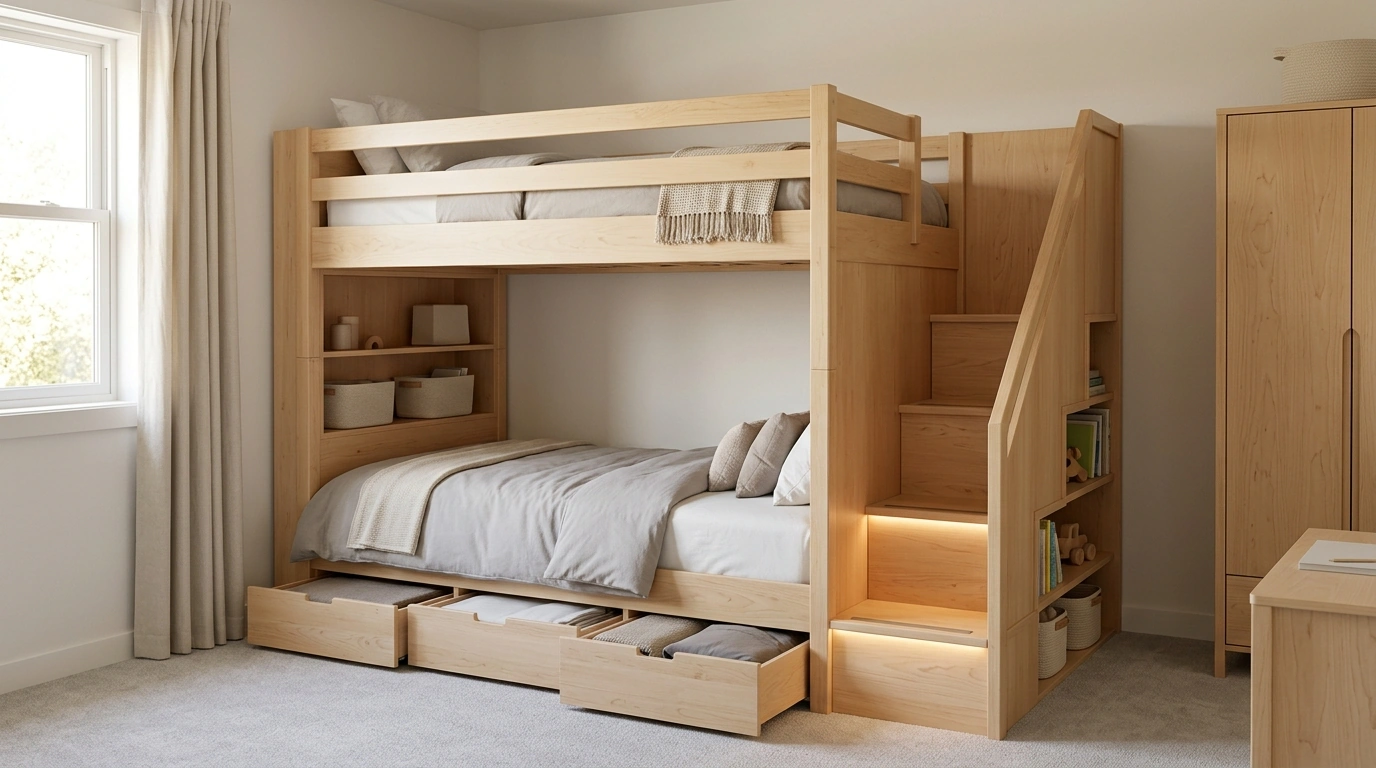
Wooden Twin Over Full Bunk Bed with Storage Staircase, Shelves, and Drawers
A twin-over-full bunk bed can solve two common bedroom problems at once: sleeping space and clutter. This wooden design pairs a roomy full-size lower bunk with a space-saving twin on top, then adds a storage staircase, built-in shelves, and drawers to keep everyday items close and organized—without needing extra dressers or toy bins.
What makes a twin-over-full layout work
The twin-over-full configuration is a smart middle ground between classic twin-over-twin bunks and two separate beds. It gives one sleeper a compact, elevated twin on top while reserving a wider, more comfortable full-size bed below.
- Top bunk (twin) offers an elevated sleep space that leaves room below for a wider full-size bed.
- Full-size bottom bunk suits older kids, teens, or a guest-friendly setup while still fitting in many standard bedrooms.
- Flexible for mixed needs: smaller sleeper on top, larger sleeper on bottom.
- More open floor space than two separate frames—helpful for play zones, study desks, or simply better traffic flow.
It’s also a practical option for homes that host sleepovers: the lower full bunk is more forgiving for taller kids or an adult guest, while the upper twin keeps the footprint efficient.
Storage staircase, shelves, and drawers: everyday organization built in
Built-in storage turns the bed into a mini “sleep-and-store” hub. Instead of adding a dresser, bookshelf, and toy bins around the room, the most-used items can live right in the footprint of the bed.
- Storage staircase provides more stable footing than a ladder for many households, while turning each step into usable storage.
- Built-in shelves can hold books, nightlights, small decor, and bedtime essentials—helpful for minimizing bedside clutter.
- Integrated drawers are ideal for clothes, extra bedding, games, or seasonal items, reducing reliance on standalone furniture.
- Clear “homes” for items make quick cleanup easier—especially in smaller bedrooms where clutter builds fast.
| Storage area | Best for | Tips for keeping it organized |
|---|---|---|
| Staircase compartments | Shoes, small toys, craft supplies | Use small bins to prevent items from sliding to the back |
| Shelves | Books, alarm clock, water bottle, display items | Place frequently used items at arm level; keep heavy items lower |
| Drawers | Clothing, spare sheets, board games | Assign one drawer per category; label for quick resets |
Safety and comfort essentials for daily use
Because bunk beds are used every day—often by kids—small setup details matter. Prioritize guardrail coverage, mattress fit, and clearances around the bed so climbing and sleep feel secure.
- Guardrails: use the top bunk only with full-length guardrails; keep the sleeping surface low enough that the rail provides meaningful protection.
- Mattress fit: ensure the top mattress height does not reduce guardrail effectiveness; follow the manufacturer’s maximum mattress thickness guidance.
- Age guidance: many safety standards recommend that children under 6 should not sleep on the top bunk.
- Clear zone: keep the bunk bed away from ceiling fans, pendant lights, and windows with blind cords; maintain headroom for the top sleeper.
- Nighttime access: add a soft, non-slip step light near the staircase and keep pathways clear of toys and laundry.
For additional safety guidance, review consumer recommendations from the U.S. Consumer Product Safety Commission (CPSC) and the bunk bed safety standard overview at ASTM International (ASTM F1427).
Room planning checklist before buying
Storage bunks often “fit” on paper but feel cramped if drawers can’t open fully or the staircase crowds a closet. A few quick measurements can prevent surprises.
| What to measure | Why it matters | What to check on delivery day |
|---|---|---|
| Ceiling height above the top bunk area | Comfort and safe clearance from lights/fans | Room has no low-hanging fixtures in the bunk zone |
| Floor space in front of drawers | Drawers need room to open fully | Drawer pull-out path is unobstructed by rugs or furniture |
| Staircase side clearance | Safe entry/exit and smooth traffic flow | Staircase doesn’t block closet/door swing |
| Wall length where the bed sits | Ensures the frame fits without crowding | Bed aligns without covering outlets you need |
Materials, finish, and durability notes
If you’re choosing mattresses, a quick refresher on standard dimensions can help confirm fit: Sleep Foundation’s mattress size guide.
Assembly, setup, and maintenance
Product options in stock
- Wooden Twin Over Full Bunk Bed with Storage Staircase, Shelves, and Drawers (in stock) — ideal for sleeping space for two plus built-in organization.
- Crystal Film Peacock Feather Pattern Wall Stickers for Home Decor (in stock) — a quick way to add personality to the wall space near the bunks without adding furniture.
- Colorful Silicone Fruit Coasters Set – Non-Slip, Heat-Resistant Drink Mats (in stock) — handy for shelf-stored water cups or bedside drinks to help protect surfaces.
FAQ
What mattress sizes are needed for a twin-over-full bunk bed?
Use a standard twin mattress for the top and a standard full mattress for the bottom. For the top bunk, confirm the recommended maximum mattress thickness so the guardrails remain effective.
Is a storage staircase safer than a ladder for kids?
A staircase often provides wider steps and a steadier climb than a ladder for many users. Safety still depends on supervision, keeping steps clear of items, and making sure kids climb with secure footing.
How much space is needed to open the drawers and use the staircase comfortably?
Plan for clear floor space in front of the drawers so they can extend fully, plus enough side clearance for the staircase walkway. Measure with door swings, closet access, and any nearby furniture in mind.







Leave a comment