Fully Automatic Electric Knife Sharpener for Home Kitchens
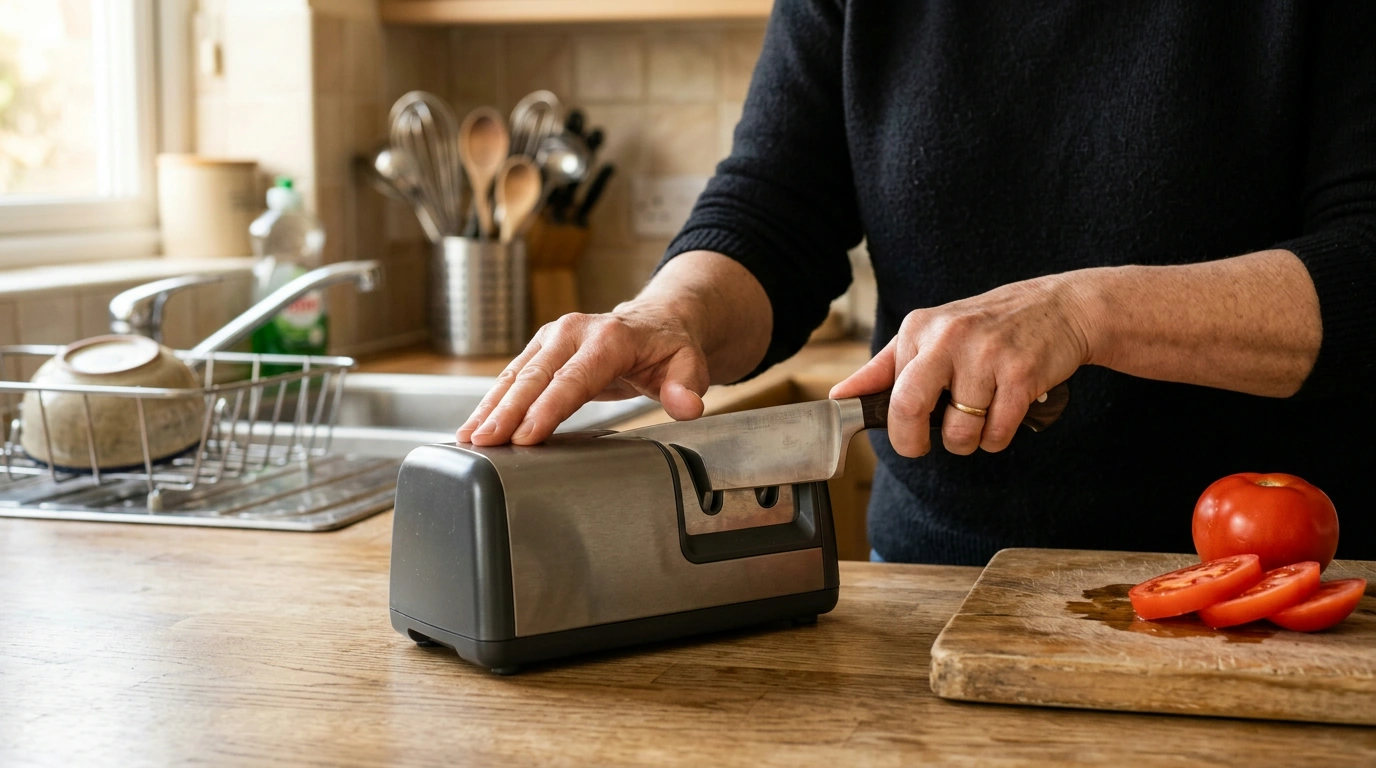
Electric Knife Sharpener – Fully Automatic Professional Kitchen Tool
A sharp knife makes prep faster, cleaner, and safer to control—while a dull blade slows everything down and encourages slipping. Our Electric Knife Sharpener – Fully Automatic Professional Kitchen Tool is built for busy home kitchens that want consistent results without the learning curve of stones and angles. Plug it in, guide the blade with calm, light passes, and bring everyday knives back to a smooth, reliable edge.
Why a fully automatic sharpener belongs on the counter
When knives are “kind of dull,” you end up pushing harder, sawing more, and spending longer on every onion, tomato, and chicken breast. A fully automatic sharpener helps you keep daily cooking knives performing like they should—clean slicing instead of crushing and tearing.
- Helps maintain a steady edge with less guesswork than manual methods.
- Makes quick touch-ups practical, so knives stay sharp more often instead of waiting until they feel unusable.
- Supports more consistent results across multiple knives in the household.
- Fits naturally into meal prep routines: sharpen, rinse, prep, repeat—without turning sharpening into a project.
What “fully automatic” changes in real kitchen use
With freehand sharpening, your results depend heavily on keeping a consistent angle from start to finish. In a busy kitchen, that’s hard to replicate from one session to the next—or from one person to another. A fully automatic model is designed to reduce that technique load.
- Guided sharpening slots help keep the blade path steady while the sharpener does the work.
- Simple operation: set on a stable surface, power on, and use light, controlled passes.
- Designed for repeatability—use the same motion each time to maintain a predictable edge.
- Useful for both restoring a tired blade and maintaining a frequently used chef’s knife with quick refresh passes.
- Less technique-dependent than freehand sharpening, which can vary by user and angle control.
A practical routine for sharper knives (without overdoing it)
Sharpening works best as a short, consistent habit—not a long session where you keep going “just in case.” Our team recommends aiming for the minimum work that restores clean slicing.
- Start clean: Wipe the blade so oil or residue doesn’t interfere with sharpening.
- Use light pressure: Let the tool sharpen—forcing the blade can wear the edge faster.
- Make controlled passes: Smooth, steady pulls are better than rushed movements.
- Check progress: Stop once the knife cuts cleanly; extra sharpening removes more metal than needed.
- Finish safely: Wipe the knife and test carefully on soft food (tomato, fruit) or paper—always away from fingers.
Sharpening quick guide (simple, repeatable habits)
| Step | What to do | Why it matters |
|---|---|---|
| Prep | Clean and dry the blade; set the sharpener on a stable surface | Reduces slipping and improves contact consistency |
| Sharpen | Use light, even passes; keep the blade centered in the slot | Helps create a more uniform edge with less wear |
| Inspect | Stop when slicing improves; avoid “just one more” out of habit | Prevents unnecessary metal removal |
| Clean up | Wipe the knife; store safely; unplug the sharpener | Keeps the station tidy and reduces accident risk |
Knife safety and edge care that extend results
A sharpener helps, but your daily habits determine how long that edge lasts. Small choices—like your cutting surface and storage—often make the biggest difference between “still sharp” and “dull again already.”
- Cut on the right surface: Wood or quality plastic boards help keep edges sharper longer than glass or stone.
- Store knives thoughtfully: Blocks, magnetic strips, or edge guards reduce nicking from drawer contact.
- Use the right knife for the job: Avoid twisting a fine edge through bones or frozen foods unless the knife is built for it.
- Keep hands clear during testing: Use controlled, safe checks—never a finger-on-edge “thumb test.”
- Listen to the food: If the knife is slipping on a tomato skin or onion, it’s time to sharpen—forcing a dull knife is a common cause of kitchen mishaps.
For broader kitchen safety and surface-cleaning fundamentals, you can also review guidance from the USDA Food Safety and Inspection Service and the FDA Food Code.
Cleaning and upkeep for an electric sharpener
Keeping an electric sharpener in good shape is mostly about staying dry, staying tidy, and avoiding shortcuts that push moisture into places it doesn’t belong.
Who this tool is best for
Make the countertop setup feel complete
- Keep drink rings off prep surfaces and tables with our Colorful Silicone Fruit Coasters Set – Non-Slip, Heat-Resistant Drink Mats.
- Build a simple “home essentials” lineup: tools that remove friction (sharper knives, cleaner surfaces, safer storage) are the ones that earn permanent space.
FAQ
How often should knives be sharpened with an electric sharpener?
Tie sharpening to use: if you cook daily, light touch-ups as soon as slicing starts to drag work better than frequent heavy sharpening. Stop as soon as performance returns—good boards and proper storage can stretch the time between sessions.
Can a fully automatic electric sharpener damage a knife?
Yes, if you use too much pressure, make too many passes, or sharpen blades that aren’t suited to this style of tool. Use light, controlled pulls and quit once the edge improves to avoid removing more metal than necessary.
What’s the safest way to test sharpness after sharpening?
Use controlled checks like slicing a sheet of paper on a stable surface or cutting a tomato on a cutting board. Keep fingers away from the edge and avoid any test that involves touching the blade directly.











Leave a comment