Industrial Electric Tankless Water Heater: Sizing & Install
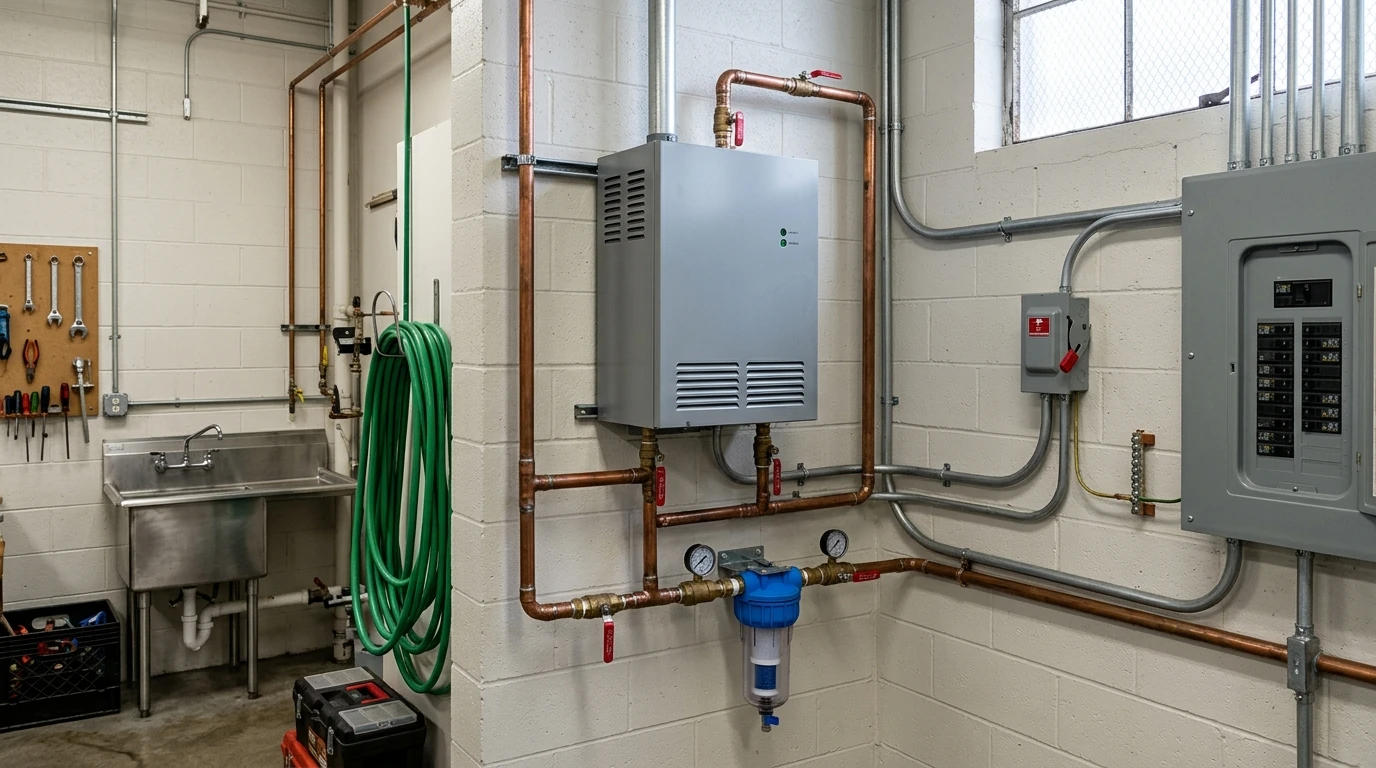
High-Power Industrial Electric Tankless Water Heater: Sizing, Installation, and Performance Expectations
A high-power industrial electric tankless water heater delivers hot water on demand without a storage tank, making it a strong fit for facilities that need reliable output, tight temperature control, and reduced standby losses. This guide breaks down where these units work best, what electrical and plumbing requirements to plan for, and how to estimate capacity and operating costs before purchase and installation.
Where high-power tankless units make sense in industrial settings
Industrial and light-commercial operations often prioritize consistent hot water delivery, predictable temperature, and minimal downtime. High-power electric tankless units tend to fit best in these scenarios:
- Process and washdown applications needing continuous hot water without recovery lag (light manufacturing, food prep areas, workshops).
- Remote points of use to reduce pipe runs, heat loss, and wait time (satellite sinks, service bays, utility rooms).
- Facilities with limited mechanical space where a tank footprint is a constraint.
- Operations seeking lower stored-water risk, benefiting from reduced chance of tank leakage and less stored hot water volume.
When hot water use is intermittent, tankless designs can also cut energy wasted keeping a large tank hot between draws. For broader efficiency context and water-heating basics, the U.S. Department of Energy water heating overview is a useful reference point.
Core performance factors that determine real-world output
“High-power” doesn’t automatically mean “unlimited flow.” Actual delivered performance is set by a few variables that interact under peak load.
- Temperature rise: Incoming water temperature versus your required setpoint. Cold inlet water demands more kW to maintain the same flow.
- Flow rate demands: Peak simultaneous use (not daily average) is what typically drives sizing.
- Duty cycle and continuous draw: Long-duration draws reveal undersizing quickly; verify continuous performance assumptions for your process.
- Temperature control behavior: Stable regulation under fluctuating flow matters for rinse consistency, safety, and process repeatability.
Quick sizing checkpoints (rule-of-thumb planning)
| Planning item | What to estimate | Why it matters |
|---|---|---|
| Peak simultaneous draw | Number of fixtures/process points used at the same time | Defines the maximum flow the heater must support |
| Required temperature rise | Target hot water temp minus cold inlet temp | Higher rise requires more kW for the same flow |
| Supply electrical capacity | Available voltage, amperage, panel space, and demand limits | High-power electric units may require dedicated circuits and service upgrades |
| Water quality conditions | Hardness, sediment, and scaling potential | Affects maintenance frequency and long-term efficiency |
Electrical requirements to plan before purchase
Industrial electric tankless heaters can be straightforward mechanically, but they are often demanding electrically. Planning early avoids commissioning delays and unexpected service upgrades.
- Confirm service voltage and phase at the facility. Many industrial installations rely on higher voltage capacity and dedicated feeds.
- Plan protection and conductors: breaker sizing, wire gauge, disconnects, and grounding/bonding must follow the manufacturer’s instructions and applicable code.
- Assess demand charges: In demand-metered facilities, a short peak can influence costs even if monthly kWh stays reasonable.
- Coordinate early with an electrician to verify panel capacity and conduit routing, especially on long runs and tight electrical rooms.
Electrical compliance is typically guided by local authority requirements and code frameworks such as NFPA 70 (National Electrical Code). Always follow the heater’s nameplate ratings and installation manual.
Plumbing, water quality, and maintenance realities
On the plumbing side, reliability is mostly about service access and scale control. Even a powerful electric unit can lose output if heat transfer surfaces scale over.
- Install isolation valves and service ports to enable descaling/flush procedures without major downtime.
- Use filtration or softening when hardness is high to reduce scale accumulation and performance loss.
- Verify activation flow and pressure requirements so low-flow fixtures still trigger consistent heating.
- Plan periodic inspections of inlet screens, heating elements, and internal sensors for stable operation.
In facilities with variable demand, point-of-use placement can also improve user experience by reducing “dead-leg” pipe volume and cutting the wait for temperature stabilization at remote fixtures.
Operating cost expectations and efficiency trade-offs
Electric tankless units typically avoid standby losses associated with stored hot water, especially where usage is intermittent. That said, operating cost is ultimately driven by the energy required to raise water temperature at the needed flow.
For facilities aligning heater selection with broader mechanical system design, service water heating guidance is also discussed in the ASHRAE Handbook (service water heating overview).
Featured products (in stock)
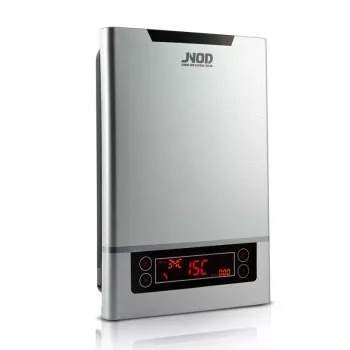
High-Power Industrial Electric Tankless Water Heater
Colorful Silicone Fruit Coasters Set – Non-Slip, Heat-Resistant Drink Mats
At-a-glance purchase details
| Item | Details |
|---|---|
| Product | High-Power Industrial Electric Tankless Water Heater |
| Price | 1532.49 USD |
| Availability | In stock |
| Product page | https://greatdealsgallery.shop/high-power-industrial-electric-tankless-water-heater/ |
Installation checklist for smoother commissioning
FAQ
How much electrical power does an industrial electric tankless water heater typically require?
Power requirements vary widely based on the flow rate and temperature rise you need. Check the unit’s nameplate kW/amps and required voltage/phase, and have a qualified electrician confirm panel capacity, breaker sizing, and any dedicated circuit needs.
Can a tankless unit support multiple fixtures at the same time?
Yes, if it’s sized for your peak simultaneous flow at the required temperature rise. If undersized, the system will typically deliver reduced outlet temperature, reduced flow, or both; some facilities split demand by using multiple units or placing point-of-use heaters in high-demand zones.
How often does an electric tankless water heater need descaling?
Descaling frequency depends on water hardness, sediment levels, and total usage. Many facilities plan routine inspections and periodic flushing via isolation valves, and add filtration or softening when hardness is high to protect performance.









Leave a comment