4-Piece Silicone Utensil Set with Wooden Handles
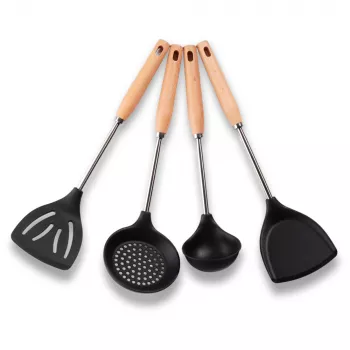
4-Piece Heat-Resistant Silicone Cooking Utensils Set with Wooden Handles
A compact utensil set can cover most daily cooking tasks while helping protect nonstick cookware. This 4-piece heat-resistant silicone set pairs flexible, pan-friendly heads with wooden handles for a comfortable grip and a warmer, more natural feel than metal or full-silicone tools. For small kitchens and everyday meals, it’s an easy way to replace mismatched tools with a coordinated set that’s gentle where it counts: on your cookware’s surface. For more guidance, see In-Depth Product Reviews: Silicone Spatulas, Turners, and Scrapers ….
What’s Included and What Each Tool Does
This 4-piece set is built around the jobs most home cooks do every day—stirring, scraping, folding, and serving. Silicone heads are designed to be kinder to nonstick and enamel surfaces, helping reduce the tiny scratches that can add up over time. The wooden handles add a bit of insulation from heat and a secure, steady grip when you’re mixing, portioning, or plating. For further reading, see MIBOTE Silicone Cooking Kitchen Utensils Set, Wooden Handle, Teal.
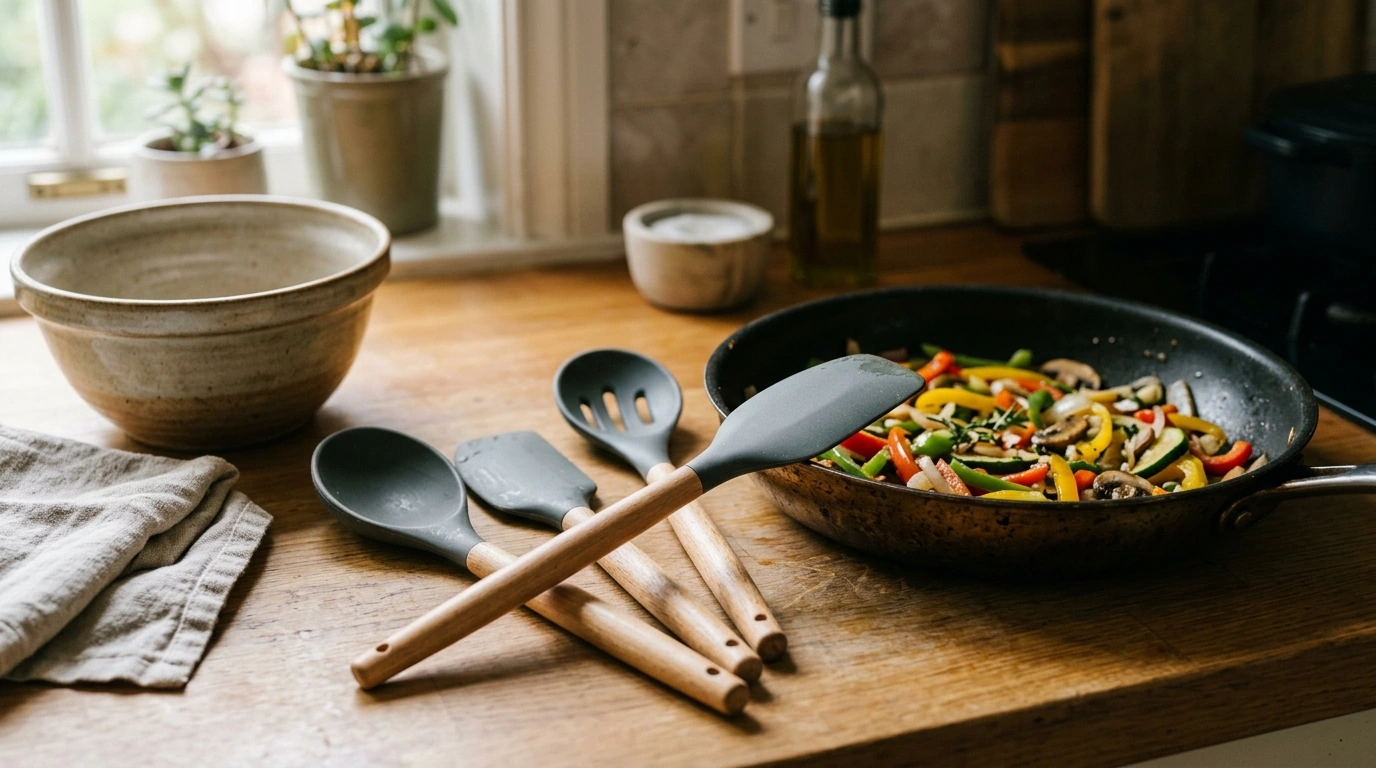
- Everyday versatility: Suitable for stovetop cooking and many baking tasks, from sautéing vegetables to folding batter.
- Pan-friendly contact: Silicone helps reduce harsh scraping on coated surfaces compared with metal tools.
- Comfort in-hand: Wood feels substantial and stable, especially when stirring thicker sauces.
- Best use cases: Scraping bowls, deglazing, folding, and serving softer foods that benefit from a flexible edge.
If you’re ready to streamline your drawer, the 4-Piece Heat-Resistant Silicone Cooking Utensils Set with Wooden Handles is a simple, focused kit that covers the essentials without taking up much space.
Heat Resistance and Where Silicone Helps Most
Heat-resistant silicone is especially useful when you’re working near hot pan rims or stirring thick foods that require the utensil to flex and hug the curve of the cookware. Compared with low-grade plastics, silicone is less likely to soften at the edges during normal stovetop use. It’s also a practical match for nonstick pans because it reduces metal-on-coating contact during scraping and stirring.
Flexibility is the feature you feel most: silicone can glide along the bottom of a skillet to pull up flavorful browned bits during deglazing, and it can sweep sauce cleanly from the corners of a saucepan. For food-contact materials in general, it’s smart to stick to reputable sellers and common safety standards; resources like the U.S. Food & Drug Administration’s overview of Food Contact Substances and NSF/ANSI 51 (Food Equipment Materials) provide helpful context on how materials are evaluated for food environments.
Common Kitchen Materials at a Glance
| Material | Pan-Safe on Nonstick | Heat Handling | Typical Strength |
|---|---|---|---|
| Silicone | Yes | High (varies by grade) | Flexible scraping and stirring |
| Nylon | Usually | Medium | Lightweight, can warp at high heat |
| Stainless steel | No (can scratch) | Very high | Excellent durability for searing tools |
| Wood | Yes | Medium | Great for stirring; can absorb odors/stains |
Comfort, Control, and the Wooden Handle Advantage
Wooden handles bring a different feel than metal: less temperature shock, a slightly grippier surface, and a balanced weight that can make repetitive stirring more comfortable. During longer cooking sessions—think risotto, gravy, or a thick pasta sauce—wood typically feels cooler in-hand than stainless, and it’s less slippery than glossy, all-silicone handles when your hands are damp.
- Cooler touch: Wood insulates better than metal, which can help when you’re working near steam and heat.
- Grip confidence: A steady handle improves control when mixing dense batters or scraping a heavy pot.
- Less wrist fatigue: A well-balanced handle helps keep motions smooth and controlled.
- Smart storage: Hang or store in a dry, ventilated spot to protect the wood finish and prevent lingering moisture.
Care and Cleaning for Silicone Heads and Wood Handles
Silicone is generally easy to clean, while wood benefits from a gentler approach. To keep the handles looking good and feeling solid, hand-washing is the safer routine—especially if you cook often and wash utensils frequently.
- Hand-wash recommended: Helps preserve wooden handles and avoids prolonged soaking.
- Dry promptly: Towel-dry after washing to reduce swelling or cracking in the wood.
- Odor refresh (silicone only): If smells linger, briefly soak the silicone heads in warm water with baking soda—avoid soaking the wooden portion.
- Avoid extreme heat exposure: Don’t rest utensils on open flame or leave them in a hot empty pan.
How to Use This Set to Protect Cookware
Nonstick and enamel cookware last longer when you minimize abrasion, avoid overly high heat, and keep utensils from scraping sharp hardware inside the pan. Silicone tools can help, but technique matters too.
When a 4-Piece Set Is the Right Fit
For a small extra touch that’s also heat-resistant on the counter, consider pairing the utensils with the Colorful Silicone Fruit Coasters Set – Non-Slip, Heat-Resistant Drink Mats to help protect surfaces from hot mugs and condensation rings.
Product Details and Availability
- Product: 4-Piece Heat-Resistant Silicone Cooking Utensils Set with Wooden Handles
- Price: $74.32 USD
- Availability: In stock
FAQ
Are silicone utensils safe to use with nonstick cookware?
Yes—silicone is generally non-scratch compared with metal, making it a good match for nonstick surfaces. Safe use still depends on avoiding sharp pan hardware (like exposed rivets) and using reasonable pressure while scraping or flipping.
How heat-resistant are silicone cooking utensils?
Heat resistance varies by silicone grade and construction, so it’s best to follow the manufacturer’s guidance. In general, avoid direct contact with open flames and don’t leave utensils resting in very hot cookware for extended periods.
Can wooden-handled utensils go in the dishwasher?
Hand-washing is recommended because dishwashers and soaking can dry out, swell, or crack wooden handles over time. Washing quickly and drying promptly helps preserve the wood’s finish and fit.










Leave a comment