6-Piece Farmhouse Dining Set: Upholstered Chairs + Bench
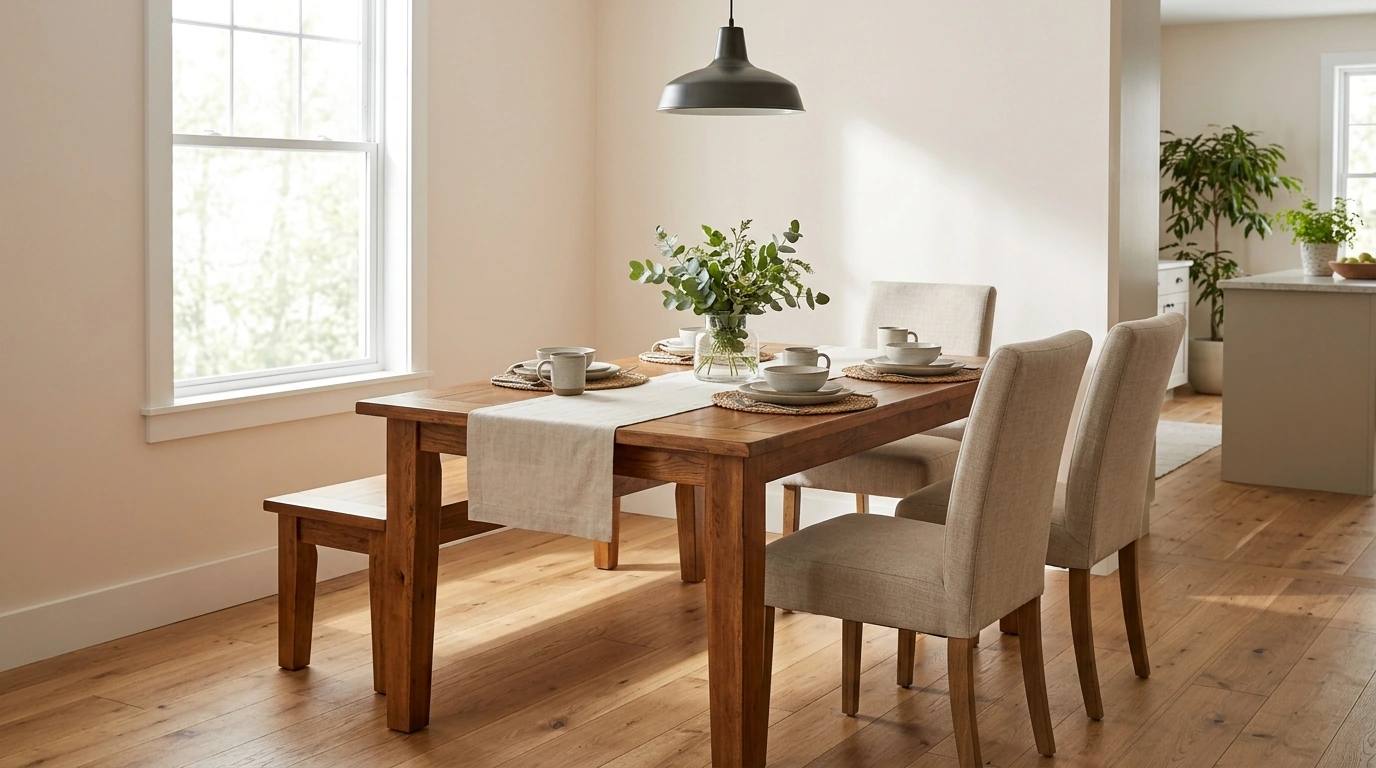
6-Piece Farmhouse Dining Set with Upholstered Chairs and Bench
A farmhouse dining set can anchor an open kitchen or dining nook with a warm, lived-in look while keeping everyday meals comfortable. This 6-piece set pairs a sturdy table with four upholstered chairs and a matching bench, creating flexible seating for family dinners, casual homework time, and weekend hosting. The mix of chairs plus bench keeps the space feeling relaxed and practical—especially when you want a pulled-together dining area without hunting for matching pieces.
At a Glance
- 6-piece configuration designed to keep seating cohesive without mixing styles
- Includes upholstered dining chairs for comfort and a bench for flexible seating
- Farmhouse-inspired silhouette that pairs well with rustic, transitional, and modern country decor
- Bench seating helps fit more guests in tighter spaces and tucks neatly under the table when not in use
What Comes in the Set
This combination is designed for real life: chairs for everyday comfort, plus a bench that makes seating feel effortless when you’re short on space or long on guests.
Set Components and Everyday Use
| Piece | Quantity | Best for |
|---|---|---|
| Dining table | 1 | Daily meals, hosting, crafts, homework |
| Upholstered chairs | 4 | Long dinners, comfort-focused seating |
| Bench | 1 | Flexible seating, kids, saving space, quick pull-up seating |
For shoppers who want one coordinated purchase (instead of piecing together a table and seating from separate collections), a 6-piece set like this also reduces the chance of mismatched seat heights, clashing finishes, or chairs that visually overpower the table.
Farmhouse Look Without the Fuss
Farmhouse style works best when it feels grounded, not busy. A clean-lined table paired with upholstered chairs and a simple bench delivers that “welcoming” vibe while staying easy to decorate around.
- Clean lines and a grounded profile create a farmhouse feel that doesn’t overwhelm smaller rooms
- Mixes easily with common finishes: warm woods, matte black lighting, brushed nickel, or antique brass
- Plays well with textured accents like linen runners, stoneware, woven placemats, and simple greenery
- A bench-and-chair pairing adds a relaxed, welcoming dining vibe compared with all-chair sets
To keep the look current, pair the set with understated accents: a neutral runner, a low centerpiece, and simple dishware. The goal is comfort-first styling—nothing too precious for everyday use.
Comfort and Seating Flexibility
Seating comfort is what turns a dining area from “nice to look at” into “the place everyone gathers.” Upholstered chairs can make weeknight meals and longer conversations feel more inviting, while a bench offers flexibility without clutter.
- Upholstered chairs help reduce fatigue during longer meals and gatherings
- Bench seating makes it easier to accommodate extra guests (especially kids) without adding mismatched chairs
- Bench can slide under the table to clear walking paths when space is tight
- A bench also works as a side piece in a hallway or at the foot of a bed if dining needs change later
Many households find the bench becomes the “bonus seat” for quick breakfasts, game night, or helping kids with homework—without needing to pull another chair from a different room.
Room Fit and Clearance Planning
Before choosing a dining set, measure the full footprint of the table plus the space people need to move comfortably. The most common frustration isn’t the table surface—it’s tight walkways and chairs that bump into walls or cabinets.
- Measure the dining area before purchase, including walkways around the table
- Aim for comfortable clearance so chairs can pull out and people can pass behind seated diners
- If the table sits near a wall, the bench side can be positioned where pull-out space is limited
- Use a rug large enough that chair legs stay on the rug when pulled out to avoid snagging and wobble
Simple Spacing Guide for Dining Areas
| Planning item | Rule of thumb | Why it matters |
|---|---|---|
| Clearance from table edge to wall/furniture | 36 in (91 cm) minimum; 42–48 in (107–122 cm) if it’s a main walkway | Helps chairs slide out and keeps traffic flowing |
| Space per seated diner | About 24 in (61 cm) of table edge per person | Improves elbow room and place settings |
| Rug sizing | Rug should extend 24 in (61 cm) beyond table edges when possible | Chairs move smoothly without catching |
For additional planning guidance, the NKBA planning guidelines are a helpful reference for clearances and walkways, and The Spruce’s dining table size guide offers easy-to-follow spacing basics for everyday seating.
Durability and Everyday Care
For fabric basics—like safe spot cleaning and routine upkeep—refer to the American Cleaning Institute for general upholstery and fabric care recommendations.
Assembly and Setup Tips
Shop Coordinated Dining and Everyday Add-Ons
- 6-Piece Farmhouse Dining Table Set with 4 Upholstered Chairs and Bench
- Colorful Silicone Fruit Coasters Set – Non-Slip, Heat-Resistant Drink Mats
- Crystal Film Peacock Feather Pattern Wall Stickers for Home Decor
Who This Set Fits Best
FAQ
How many people can a 6-piece dining set like this seat?
In everyday use, it typically seats six: four people in the upholstered chairs and two on the bench. Depending on table length and how much elbow room you prefer, the bench can sometimes squeeze in an extra guest for short gatherings.
Are upholstered dining chairs hard to keep clean?
They’re manageable with routine care: vacuum regularly with a soft brush attachment and spot-clean spills quickly. Using a fabric-safe cleaner and testing it in an inconspicuous area helps, and lighter upholstery will usually show stains sooner than darker fabrics.
What clearance is needed around a dining table for chairs and walking space?
Plan for at least 36 inches of clearance from the table edge to walls or other furniture, and aim for 42–48 inches where you expect frequent traffic. Also account for nearby doors, kitchen islands, and the main walking route through the room.







Leave a comment