Cotton Kitchen Towels: Wipe, Rinse, Reuse Daily
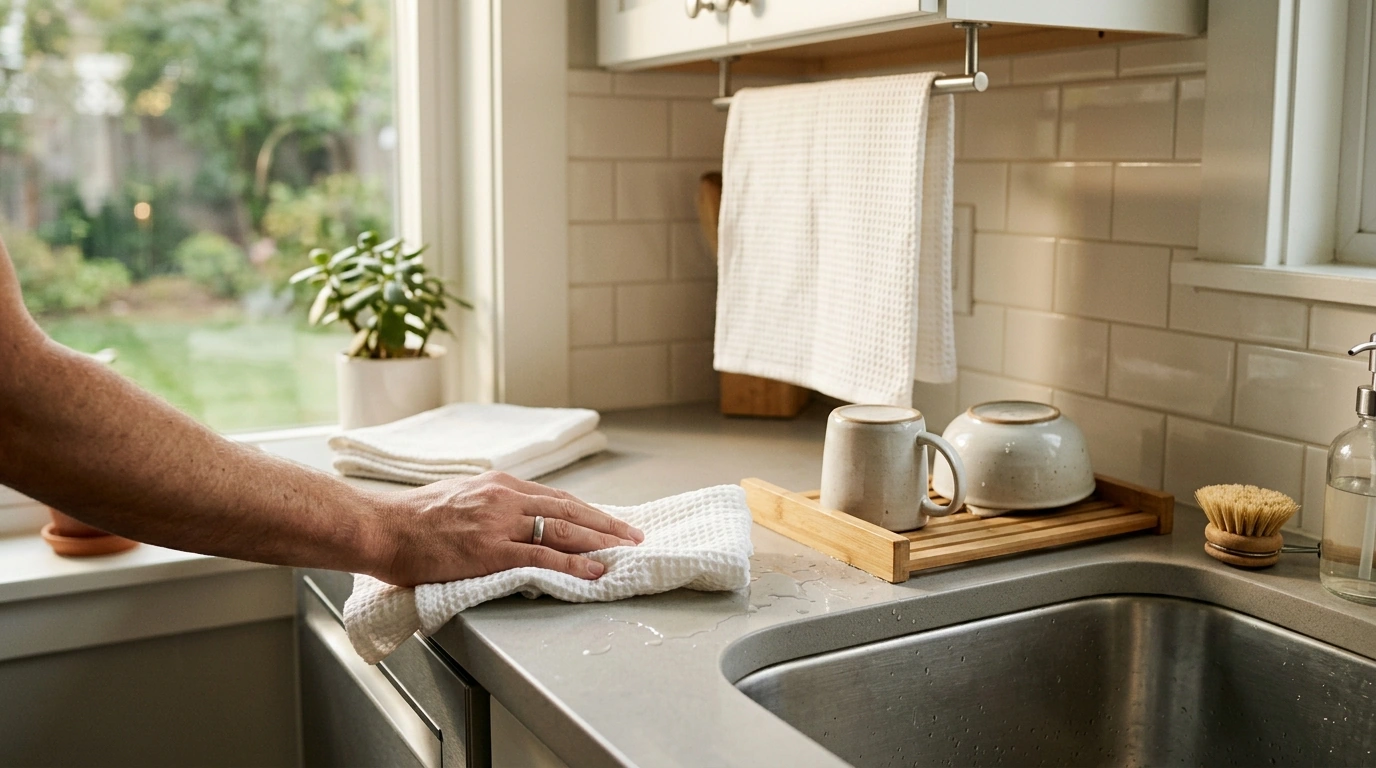
A good kitchen towel quietly does a lot: it dries hands fast, wipes counters without streaks, and handles little spills before they turn into a bigger mess. Our Super Absorbent Cotton Kitchen Towels are made for that everyday rhythm—grab, wipe, rinse, reuse—so the kitchen stays tidy without constantly reaching for disposable paper.
What “daily-use” towels need to do well
When you’re moving between chopping, rinsing, stirring, and plating, a towel has to keep up without becoming a soggy, smeary annoyance. Our team looks for a few practical “non-negotiables” in a towel that’s going to live by the sink:
- Absorb quickly so small spills don’t spread across the counter.
- Rinse out easily between tasks (coffee drips, water splashes, quick wipe-downs).
- Stay comfortable in-hand for repeated use throughout the day.
- Hold up to frequent washing so they remain part of the routine, not a one-week fix.
- Be flexible enough to cover multiple roles: dishcloth, counter wipe, sink-side helper, and drying towel.
Why cotton is a practical choice for the kitchen
Cotton is a go-to material for kitchen towels because it matches how you actually clean: quick wipe, quick rinse, quick reset. It’s naturally absorbent, easy to launder, and simple to keep in rotation with the rest of your linens. Since cotton towels are reusable, they also help you cut down on the “grab-and-toss” cycle for everyday cleanup.
For food-safety basics—especially around cleaning and cross-contamination—reliable guidance from the USDA FSIS and the CDC is worth a quick skim if you’re tightening up your kitchen routine.
Common kitchen tasks and a towel routine that keeps things fresh
| Task | Best towel use | Quick rinse/refresh tip | When to swap for a clean one |
|---|---|---|---|
| Wiping water around the sink | Fold and wipe edges/corners where water collects | Rinse under warm water and wring well | When the towel stays damp too long or smells musty |
| Drying hands while cooking | Keep one towel dedicated to hands | Hang to dry between uses | After handling raw ingredients or heavy cooking sessions |
| Counter wipe-downs | Use a damp towel for crumbs and splashes | Rinse frequently to avoid smearing | After wiping oily spills or strongly scented foods |
| Quick dishwashing support | Use as a dishcloth for spot scrubbing and rinsing | Rinse thoroughly to remove soap/food residue | When residue doesn’t rinse cleanly or towel loses softness |
| Glass and stainless touch-ups | Use a cleaner, slightly damp towel; finish with a dry fold | Keep one towel for “finish work” only | When the towel picks up grease or lint from other tasks |
How to use reusable dishcloths without spreading mess around
The easiest way to keep reusable towels feeling “clean enough” all day is to reduce cross-traffic. Instead of one towel doing everything, use a small system you can follow without thinking.
- Create simple “zones”: one towel for hands, one for counters, one for dishes—this keeps everything feeling cleaner with less effort.
- Fold the towel into quarters to get multiple clean wiping surfaces before rinsing.
- Rinse early and often; a fast rinse prevents buildup and keeps wiping effective.
- Wring thoroughly and hang to dry between uses to reduce lingering dampness.
- Keep a small stack ready: swapping to a fresh towel is often faster than trying to “push through” with a soggy one.
Care tips that help towels stay absorbent
Absorbency is partly the fabric and partly the habits. A few small care choices help cotton towels keep doing their job instead of just moving water around.
- Wash regularly—kitchen towels work hard and do best with a consistent laundry rhythm.
- Avoid heavy fabric softener if absorbency starts to feel reduced; residue can interfere with water pickup on many fabrics.
- Let towels dry fully between uses (and between wash and storage) to keep them feeling fresh.
- If towels pick up grease, wash promptly so oil doesn’t set in and reduce performance.
- Keep one towel “clean-only” for drying dishes or finishing touches, separate from spill duty.
For straightforward laundering guidance, the American Cleaning Institute has helpful basics that apply well to kitchen linens.
Small upgrades that make the kitchen feel pulled together
Daily cleanup feels easier when your setup supports it. You don’t need a full reorg—just a couple of sensible placements and a quick reset habit.
- Keep towels where the action is: by the sink, near the prep area, and within easy reach for quick wipes.
- Pair reusable towels with a simple “reset” routine: wipe counters, dry the sink rim, and hang towels to dry after meals.
- Use coasters to reduce drips and rings on counters and tables, especially in busy households.
- Stock a few extra towels so it’s always easy to grab a clean one when needed.
Quick pick: who these cotton towels are ideal for
Shop our everyday cleanup picks
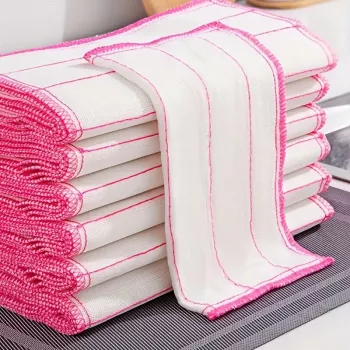
- Super Absorbent Cotton Kitchen Towels – Reusable Dishcloths for Daily Use ($2.01)
- Colorful Silicone Fruit Coasters Set – Non-Slip, Heat-Resistant Drink Mats ($12.67)
FAQ
How often should reusable kitchen towels be washed?
If you use towels heavily throughout the day, washing daily (or every 1–2 days) keeps your routine fresher. Swap immediately after wiping raw meat juices, grease, or strong odors, and keep multiple towels in rotation so you can change them fast.
Why do some towels stop feeling absorbent over time?
Reduced absorbency is often caused by buildup from fabric softener or excess detergent, leftover grease, or not rinsing thoroughly between uses. A thorough wash, skipping heavy softener, and letting towels fully dry between uses usually restores better performance.
Can the same towel be used for hands, counters, and dishes?
It’s best to separate towels by job—hands vs. counters vs. dishes—to reduce cross-contamination and keep each towel cleaner longer. Even though everything is washable, a simple separation system makes the kitchen feel noticeably more organized.










Leave a comment